Clinically Proven Tool You Can Use in Your Child & Family Therapy Sessions
By Karen A. Green, MSW, LSSW — Creator of Conscious Care Cards
In child and family therapy, some of the most meaningful breakthroughs don’t come from rehashing the past; they come from witnessing a moment of connection happen in real time.
Instead of talking about connection, you are facilitating connection with Conscious Care Cards.
As clinicians, we strive to create a space where caregivers and children can experience each other differently: with more attunement, softness, safety, and emotional availability.
One simple, trauma-informed way to facilitate these moments is by pulling a Conscious Care Card during the session and guiding the parent and child through the activity while you observe and support the interaction.
Conscious Care Cards are a research-backed emotional enrichment toolkit I created after more than 25 years working in child and family mental health — including 16 years as a school social worker and now as the Director of a nationally recognized Mental Health, Social Service, and Addiction Counseling program. Each card offers a simple, attachment-building activity designed to strengthen co-regulation, emotional literacy, and secure attachment between caregiver and child.
Do you ever find yourself feeling a little stuck in a session — unsure which direction to go, or noticing that both you and the child are losing momentum?
Do you ever look at your schedule and think, “I’m not totally sure what this next family needs from me today”?
You’re not alone. This is common even among the most seasoned clinicians; we all experience moments of uncertainty, stagnation, and/or resistance in the room.
That’s exactly where Conscious Care Cards can support you. When you pull a card and let the activity guide the session, you instantly have a gentle, structured framework to anchor the parent–child interaction. It creates guided movements to re-engage the nervous
system and gives you a clear window into their relational patterns — all without having to plan something new or reinvent the wheel each time.
This small practice becomes a powerful window into the attachment system — and an incredibly effective tool for deepening the therapeutic process.
Therapists have said that the cards give their session some structure and a low-pressure way to practice attunement right in the therapy room, allowing you to observe real relational patterns as they naturally unfold. This is an opportunity for you to give therapeutic support and suggestions in real time.
Why This Tool Works
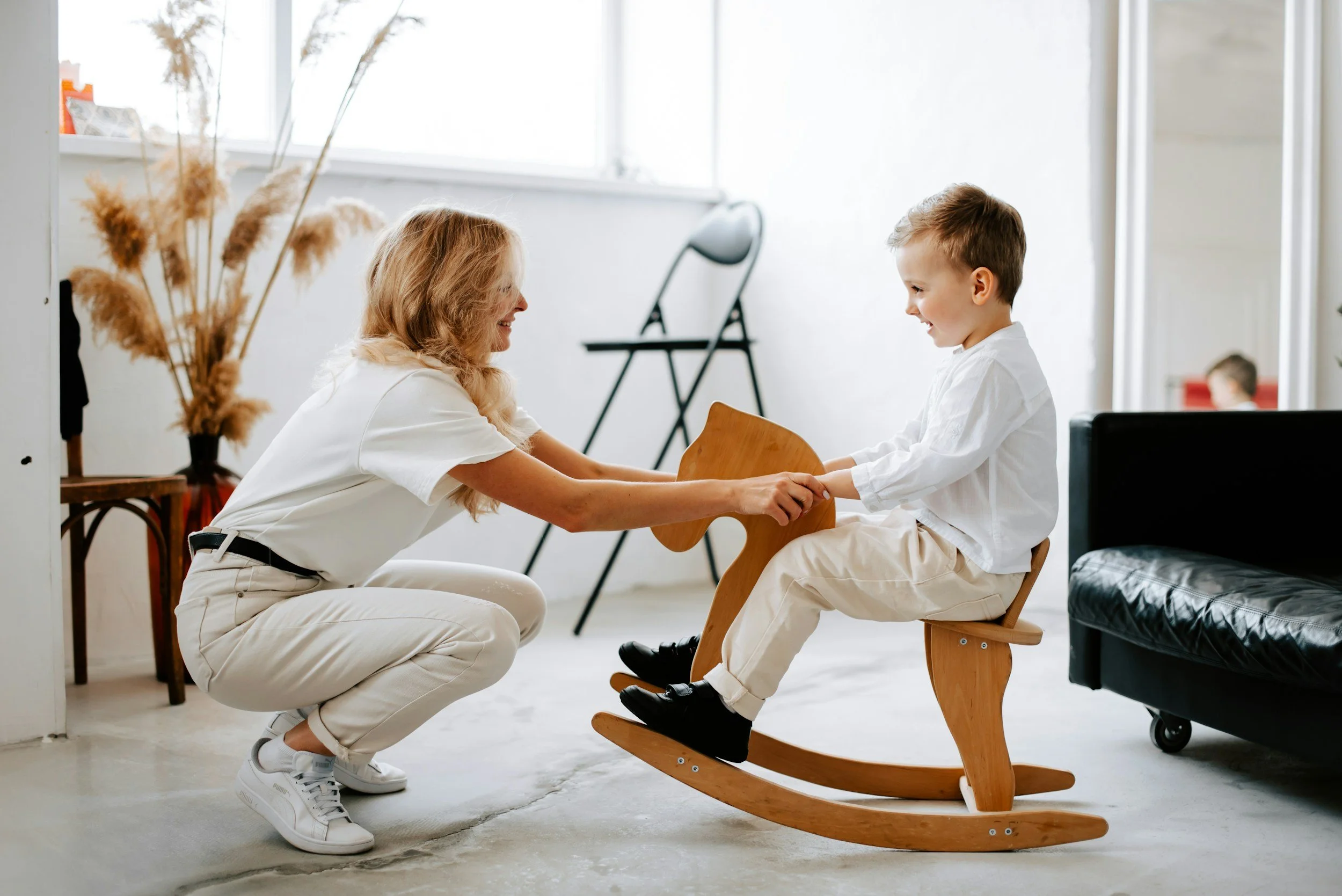
When a therapist watches a parent and child engage in a structured, connection-based activity, three important things happen:
1. You See Their Natural Relational Patterns
The way they communicate… The way they repair… The way they respond to stress, humor, confusion, or shutdown…
These patterns tell us more than any questionnaire could, and they surface gently when the child and caregiver are engaged in a playful, low-pressure activity.
Parents Receive Coaching in the Moment
Instead of talking about how important connection is, you are facilitating it in real time.
You can:
· Model attuned language
· Reinforce co-regulating behaviors
· Gently adjust tone, pacing, or emotional responsiveness
· Highlight successes (“Right there — did you see how she softened when you slowed your voice?”)
· Support repair if tension emerges
This becomes an immediate, corrective emotional experience — much more powerful than conceptual instruction alone.
Children Experience a Moment of Predictable, Safe Connection
For many families, especially those with trauma histories, simply being seen, heard, and emotionally met in the presence of a trusted therapist creates safety they can feel in their bodies.
It signals:
· “This is what attunement looks like.”
· “This is what repair feels like.”
· “This is what it’s like when a grown-up is fully present for me.”
That experience is the heart of healing.
How to Use This Tool in Session
Step 1: Invite the Parent to Draw a Card
Let the child watch and be curious. The anticipation itself brings the nervous system into a regulated, social engagement state.
Step 2: Have Them Complete the Activity Together
You remain quiet for the first minute or two — simply observing their natural rhythm.
Then, you can offer:
· Gentle coaching
· Mirroring of attuned behaviors
· Language that supports safety
· Encouragement to slow down, reflect, or reconnect
The key is light touch guidance, allowing the moment to unfold authentically.
Step 3: Debrief Together
Each card has a closing at the end that guides the parent to ask the child questions and model the behavior or talk about their experience with a certain feeling.
Then as the therapist you can go further by inquiring:
Ask the child: “What did your body feel like when you were doing that together?”
Ask the parent: “What did you notice when you slowed down and connected that way?”
These reflections help encode the positive experience and give both parties emotional language they can use at home.
Pulling a Conscious Care Card in session gives families a predictable, grounding ritual they can repeat at home when emotions run high.
It helps them:
· Reconnect quickly
· Repair ruptures
· Strengthen emotional safety
· Build resilience and co-regulation patterns
And the therapist becomes the gentle guide who helps anchor these skills in real time.
I have also used these cards as supplemental homework for families between sessions. I have found that the families who took the time to do the Conscious Care Card activities at home between sessions exhibited exponential growth in their treatment goals.
Let’s collaborate!
Conscious Care Cards were created to support attunement, emotional regulation, and secure attachment — the foundation of all child and family therapy. When Conscious Care Cards are used in the therapy room, the cards become more than an activity: they become a living demonstration of connection, attunement, and repair.
If you’re using the cards in your practice, I would love to hear what you’re noticing in your sessions. If you're not using them yet but would like to, please reach out https://www.consciouscarecards.com/
At Conscious Care Cards, we’re on a mission to help heal a million kids by empowering caregivers to become their child’s most powerful healer — one simple moment of presence at a time. We offer bundles and practitioner discounts to help deepen our partnerships and expand this healing work together.
If you are a child and family therapist or know a clinician, please share this blog with them. We are envisioning a new way to partner with our practitioners. Let's all work together to help heal a million kids!